Surgical Expertise – Vitreoretinal Surgery
For representative surgical cases and illustrative examples of technique,
please visit the Vitreoretinal Case Studies page,
where curated videos and case descriptions are available.
Overview
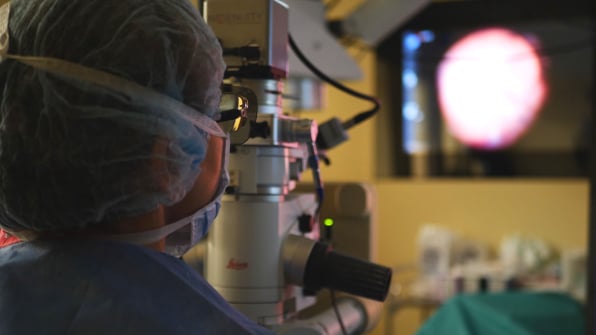
Vitreoretinal surgery addresses diseases of the posterior segment of the eye, including the vitreous body, retina and macula. These conditions often require complex surgical decision-making and precise intraoperative technique, particularly when posterior segment pathology coexists with anterior segment disease.
Dr. Ozana Moraru’s vitreoretinal surgical activity focuses on selected and complex cases, frequently in the context of combined pathology or situations where posterior segment intervention is required as part of a broader surgical strategy.
Clinical Approach
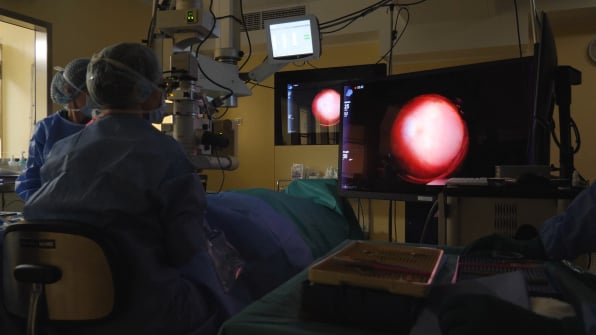
Dr. Moraru approaches vitreoretinal pathology with an emphasis on careful case selection, thorough preoperative evaluation and integrated surgical planning. Particular attention is given to the relationship between anterior and posterior segment disease, as well as to the impact of vitreoretinal pathology on visual prognosis and surgical sequencing.
Her clinical decision-making prioritizes:
- accurate assessment of retinal status and vitreoretinal traction;
- timing of surgical intervention in relation to anterior segment procedures;
- selection of the most appropriate surgical approach based on functional and anatomical considerations.
This integrated perspective is especially relevant in eyes with previous surgery, trauma or complex ocular history.
Types of Cases
Dr. Ozana Moraru manages selected vitreoretinal cases, including:
Retinal detachment in specific clinical contexts;
Macular pathology requiring surgical intervention;
Vitreoretinal complications associated with cataract or anterior segment surgery;
Combined anterior and posterior segment pathology.
These cases often require individualized surgical strategies and close collaboration between diagnostic evaluation and operative planning. Her experience in managing complex ocular anatomy allows for adaptive intraoperative decision-making when posterior segment involvement influences overall surgical outcomes.
Surgical Technique and Intraoperative Considerations
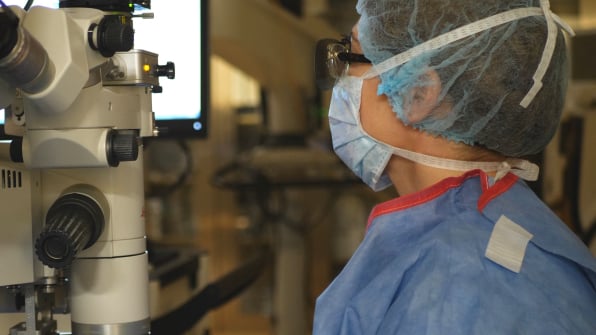
Vitreoretinal surgery demands precise microsurgical technique and continuous intraoperative assessment. Dr. Moraru’s surgical methodology emphasizes controlled tissue handling, maintenance of intraocular stability and careful management of vitreoretinal interfaces.
In complex cases, vitreoretinal procedures may be combined or staged with anterior segment surgery, requiring thoughtful sequencing and adaptability. Intraoperative decisions are guided by real-time anatomical findings and the overarching goal of preserving retinal integrity while optimizing functional recovery.
Her approach reflects a balance between technical execution and surgical judgment, particularly in situations where posterior segment intervention plays a critical role in the success of the overall treatment plan.