Surgical Expertise – Refractive Lens Implantation Surgery
For representative surgical cases and illustrative examples of technique,
please visit the Refractive Lens Implantation Case Studies page,
where curated videos and case descriptions are available.

Overview
Refractive lens implantation surgery is a refractive surgical procedure designed to correct moderate to high refractive errors by implanting an intraocular lens to improve visual performance. This approach is typically indicated in patients who are not suitable candidates for corneal refractive procedures or who require a lens-based solution to achieve optimal visual correction.
The procedure expands the spectrum of refractive surgery by offering a reversible and anatomically conservative alternative in selected cases, while preserving the natural crystalline lens when appropriate.
Clinical Approach
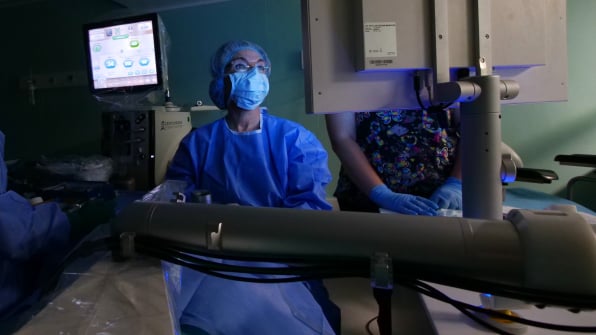
Dr. Ozana Moraru’s approach to refractive lens implantation surgery is based on careful patient selection, detailed preoperative assessment and individualized surgical planning. Each case is evaluated with attention to ocular anatomy, refractive stability, anterior chamber parameters and overall visual expectations.
Preoperative planning includes comprehensive biometric analysis, endothelial evaluation and assessment of potential long-term implications of lens implantation.
The choice of intraocular lens type and surgical strategy is guided by anatomical safety, optical quality and patient-specific refractive goals.
Types of Cases
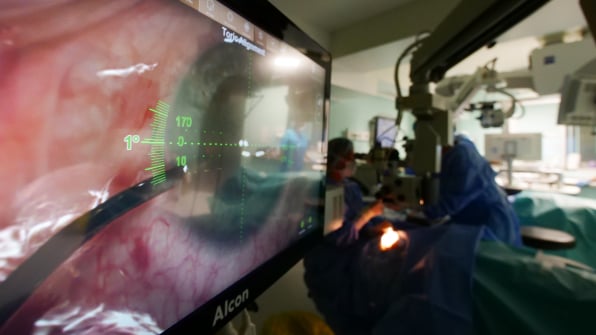
Refractive lens implantation surgery is considered in selected clinical scenarios, including:
Moderate to high refractive errors unsuitable for corneal refractive surgery;
Patients with thin corneas or corneal irregularities;
Stable refractive conditions requiring lens-based correction;
Cases where preservation of corneal integrity is a priority.
These cases require precise evaluation and individualized decision-making to balance refractive benefit with long-term ocular health.
Surgical Technique and Intraoperative Considerations
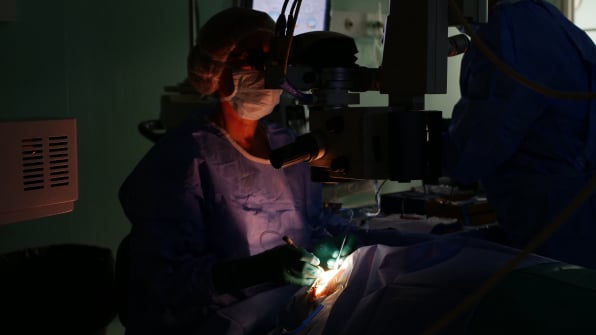
Refractive lens implantation surgery demands meticulous microsurgical technique and strict adherence to intraoperative safety principles. Surgical execution focuses on controlled access to the anterior chamber, accurate lens positioning and preservation of intraocular structures.
Intraoperative considerations include maintenance of stable intraocular pressure, protection of the corneal endothelium and precise centration of the implanted lens. Surgical decisions are continuously adapted based on real-time anatomical findings to ensure optimal functional outcomes and minimize operative risk.
This lens-based refractive approach reflects a balance between technical precision and surgical judgment, integrating refractive objectives with long-term anatomical considerations.